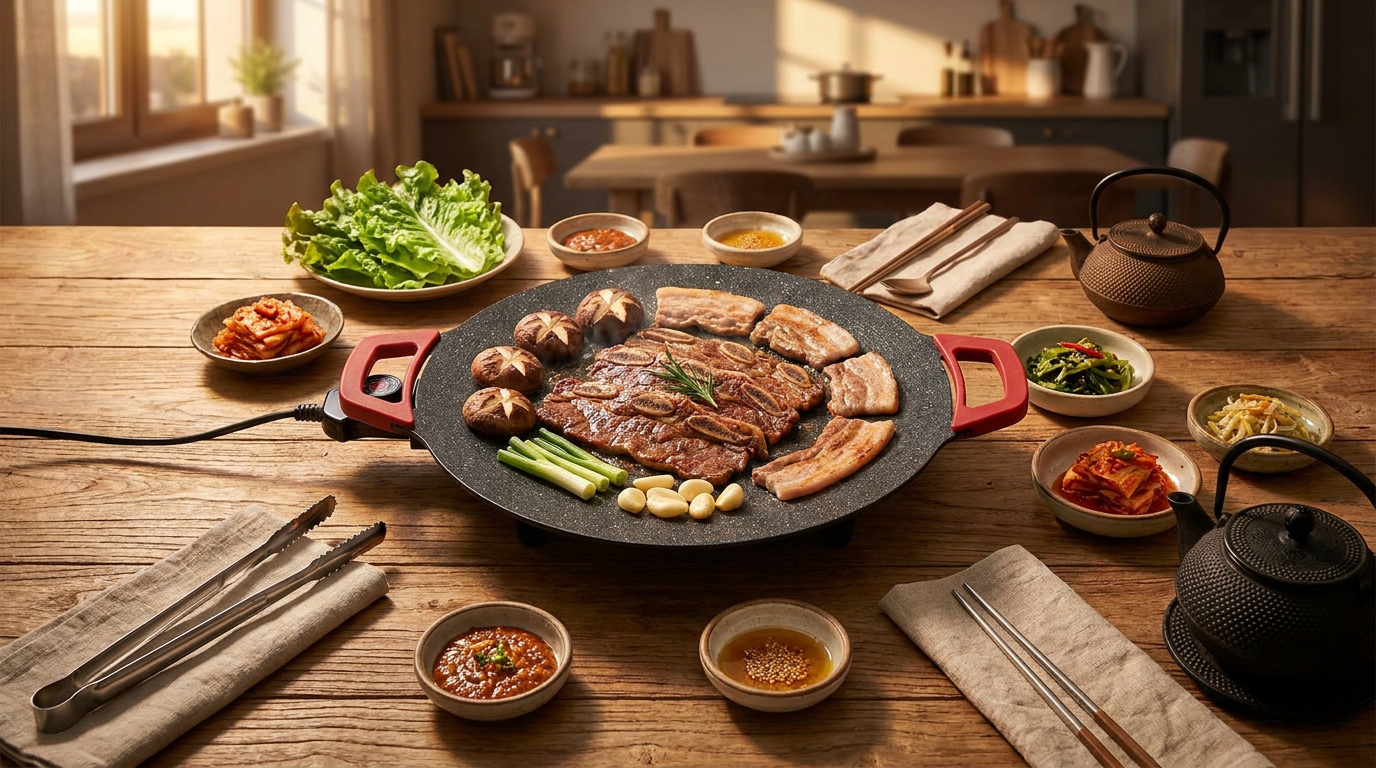
Selecting the Right Electric Korean BBQ Grill for Indoor Use
June 8, 2026. This analysis evaluates the technical requirements of high-performance indoor grilling hardware. It is written for consumers prioritizing heat consistency and smoke management over traditional charcoal aesthetics.
The Technical Limitations of Traditional Indoor Grilling
The conventional wisdom says that to achieve an authentic Korean BBQ experience, one must contend with open flames or butane canisters that present significant safety risks in modern apartments. Most consumers believe that a standard electric griddle is a sufficient substitute for a dedicated electric Korean BBQ grill, but the thermal physics tell a different story. Standard kitchen griddles often lack the localized heat zones necessary to sear thin-sliced meats like brisket or pork belly while simultaneously maintaining lower temperatures for vegetables. Furthermore, the smoke point of common marinades creates a ventilation crisis in enclosed spaces. According to the Joydeem Electric Grill review by Best Korean BBQ & Hot Pot Setup?, the integration of specific temperature knobs allows for a more controlled dining experience than the binary on-off switches found on budget appliances. Without precise thermal regulation, the Maillard reaction is inconsistent, leading to steamed meat rather than charred protein. Run the math: a grill that cannot maintain a consistent 400 degrees Fahrenheit across the center of the plate while managing fat runoff is simply a large frying pan, not a specialized electric Korean BBQ grill capable of replicating restaurant-grade results.
Engineering the Modern Electric Korean BBQ Grill
Here’s the part nobody talks about: the efficiency of an electric Korean BBQ grill is determined by its heating element geometry and drainage efficiency. While portable electric indoor grill kbbq setups are trending, many fail because they do not account for the high fat content of premium meats. A high-quality electric Korean BBQ grill must utilize a non-stick surface that facilitates rapid grease movement away from the heat source to prevent flare-ups and acrid smoke. Data from user search patterns indicates a significant shift toward hybrid models, specifically the electric hot pot and grill combo. These units leverage a shared power supply to manage two distinct cooking methods simultaneously. The specialized electric Korean BBQ grill architecture often features a central dome or a sloped plate, a design choice specifically engineered to let rendered fat flow into a collection tray. This is not just a convenience feature; it is a chemical necessity for indoor safety. By removing the fat before it reaches its smoke point, the appliance allows for high-heat searing without triggering residential smoke alarms. I’ll change my mind when a flat-surface griddle can prove it handles 20% fat-content wagyu without creating a localized smog event.
A Decision Framework for High-Frequency Use
When moving past the marketing jargon, the selection of a residential grill should be treated as a procurement exercise based on specific performance metrics. The market is saturated with low-wattage units that struggle to recover their surface temperature after cold meat is applied. To ensure your electric Korean BBQ grill performs consistently, evaluate potential hardware against these specific technical requirements:
- Wattage minimums: Look for at least 1200W to 1500W to ensure rapid heat recovery between batches.
- Coating durability: Verify the use of PFOA-free non-stick coatings that can withstand high-heat cycles without degrading.
- Integrated drainage: Prioritize units with a dedicated grease channel and removable drip tray for smoke mitigation.
- Zonal control: For hybrid units, ensure independent thermostats for the grill and the hot pot sections.
- Cleaning accessibility: The heating element should be protected or removable to allow for thorough sanitation of the chassis.
Shop Electric Korean BBQ Grill here.
Sources